Accessibility in Action: Simple Ways to Build a More Inclusive Community
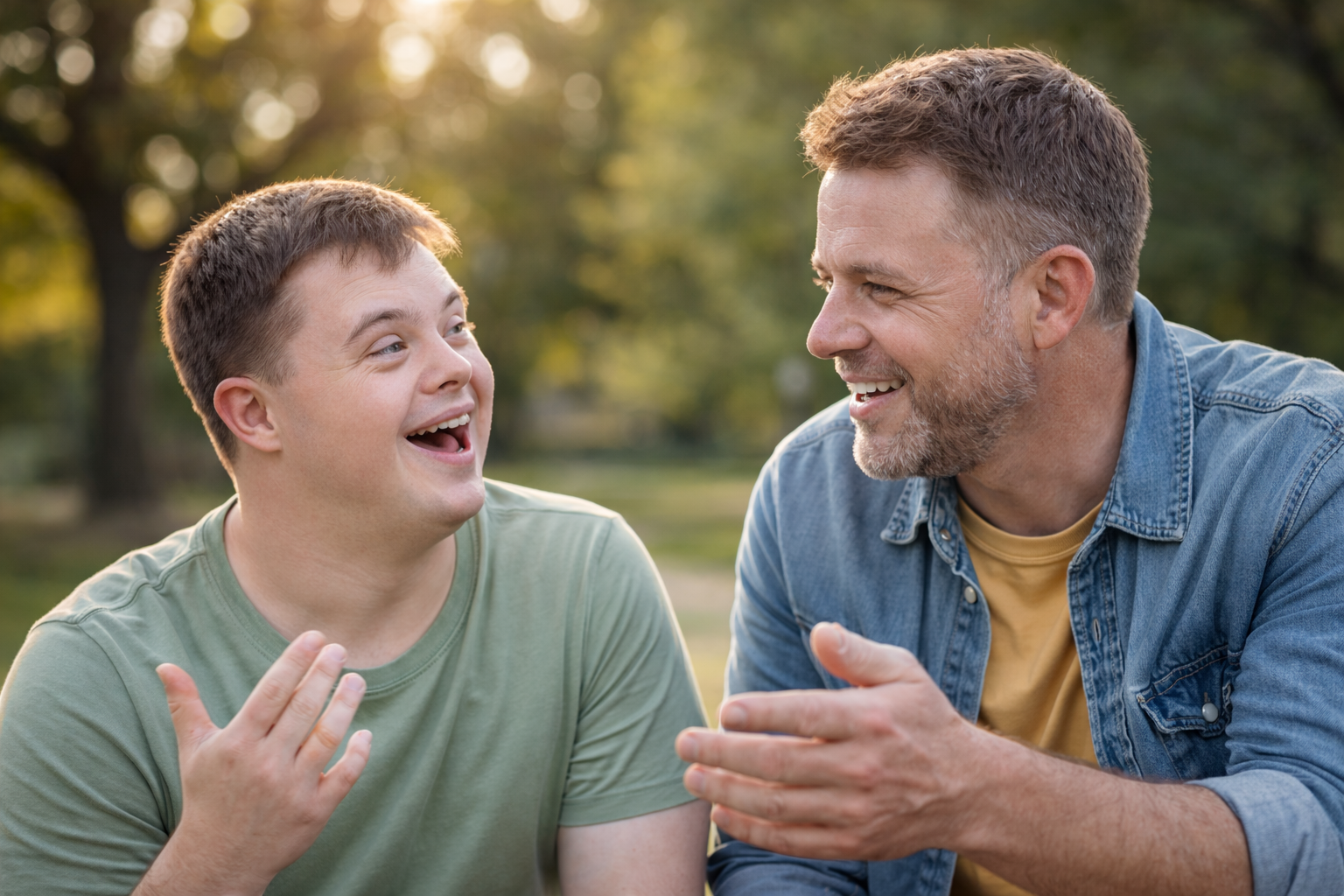
We all have a chance to support real lives on a daily basis, and many of us don’t even realize it. The role of eitas is to ensure that everyone in Jackson County can live a full, connected life. People just like you are how our mission will become a reality. Our neighbors with Intellectual and Developmental Disabilities (I/DD) are enjoying more accessibility and inclusion on a regular basis. To help us continue this great progress, here are 5 simple steps you can take to improve accessibility for our friends with I/DD:
1. Use person-first and respectful language.
Here is a simple way to remember and practice this:
Nouns go before adjectives.
When you are interacting with a person with Down Syndrome, you are talking to a person, not a disorder. The noun is always first, because we are all people first.
You’ll note two examples of this in the introductory paragraph. We referred to our neighbors with Intellectual and Developmental Disabilities. We did not reference our I/DD neighbors, because they are our neighbors first.
This might seem like a small step, but it makes a big difference. Our friends in the I/DD community do not view themselves principally from their disability, but they can often tell when others do.
2. Ensure digital and physical spaces are available.
It is impossible to belong if you are unable to access the space of belonging.
The next time you attend an event, go out to eat, or drop your kid off at a playground, look for examples of inclusive accessibility. For instance, could someone in a wheelchair access and enjoy this space? Does the primary gathering space leave room for the necessary equipment our friends who utilize mobility assistance will be using?
In short, can everyone access this space and can everyone truly be included?
This applies to digital spaces, as well. Technology makes up much of our interactions on a daily basis. Are your online gatherings accessible and easy to navigate? The next time you are updating a website or a social media page, ask yourself:
Would this content be accessible to a person who is blind?
Is my page easy to navigate for a person with motor disabilities?
Could this same content be accessible in less clicks?
Remember, the goal is not participation on the margins. Full inclusion is complete access for all, not participation on the periphery.
3. Include People with I/DD in Planning and Decision-Making
The invitation to participate in planning is another simple step that for many is simply taken for granted.
The next time you are planning an event that you know a friend with I/DD will be invited to, or will attend, take the next step and invite him or her to participate in the preparation.
This serves a dual purpose, because not only does this dignify and honor your friend with I/DD, but it will also go a long way to ensuring you accomplish step #2!
As you welcome a person with I/DD into this process, go a step further and do your best to incorporate something they offer into the planning. Remember, nothing is too small. Whatever portion of the planning is colored by their contribution will fill them with the same pride anyone else feels when they know their idea was valuable enough to use.
4. Support Organizations that Prioritize Accessibility
As you become more intentional in looking for areas of accessibility and inclusion, you will quickly be able to identify the places and organizations that make it a priority. Once you notice this, the simple way forward is to reward it.
Perhaps you frequent multiple coffee shops, but one coffee shop has only tall counters that someone in a wheelchair can’t see over and the layout includes entire spaces with stairs but no ramp or elevator, cutting off complete access. Perhaps the other coffee shop has a level floor plan and lower counters with kiosks or point of sales that can be used by someone with I/DD.
Make sure the coffee shop that places an emphasis on accessibility is properly supported and acknowledged for their effort. It is good to support such a place. It is even better to champion their efforts!
5. Advocate locally for inclusion in schools and workplaces.
The easiest way to get involved is to start at the most common locations, school and work.
The next time you are at school, or attend a parent-teacher meeting, keep an eye out for accessibility challenges. Are sinks and water fountains in reach of all kids? Is the playground equipment accessible and in proximity to the other portions of the playground?
The same observations apply at work. Is the intercom within reach? How easy do doors open? Is everything in the kitchen within reach?
Once you see it…
In many ways, this process is eye-opening. Once you begin to sense the world through the perspective of a person with I/DD, you will see the challenges everywhere, as well as the relief when the all-too-common obstacles are met.
And, the best part of all, is your perspective is contagious!
When you ask these questions at school, your kids will notice. When you make these observations at work, your colleagues will see it too. When you point out these challenges in public and acknowledge when they are met well, your peers notice.
This is how we create a fully accessible and all-inclusive Kansas City, by multiplying the perspective of our friends with I/DD. When we experience the world as they do, we become better advocates, and we ensure that the way we interact in society is available to them, as well.