
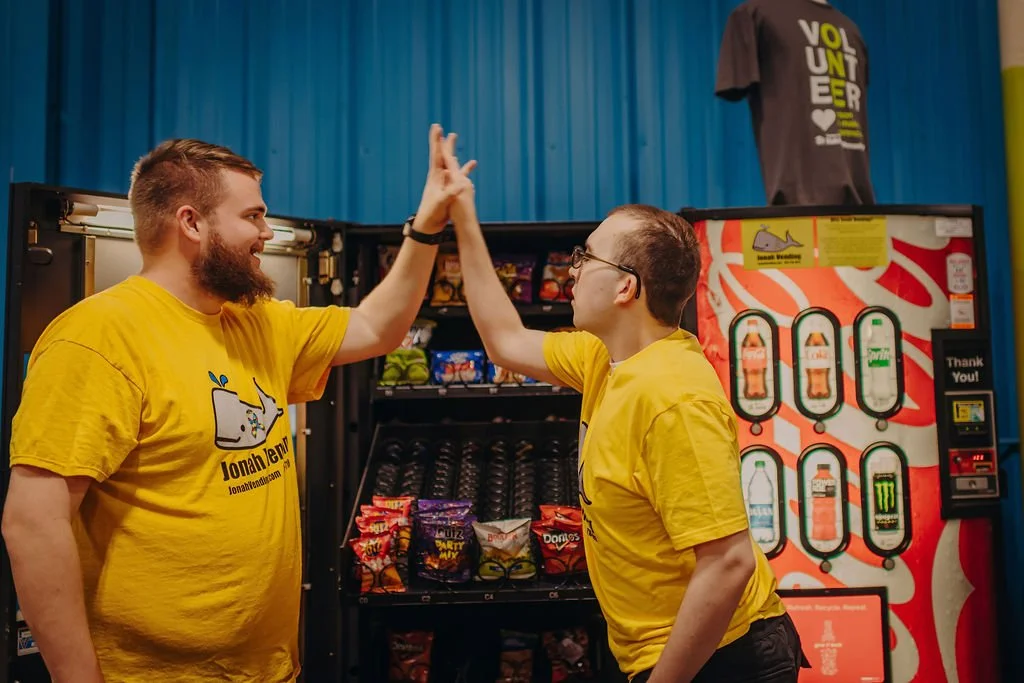

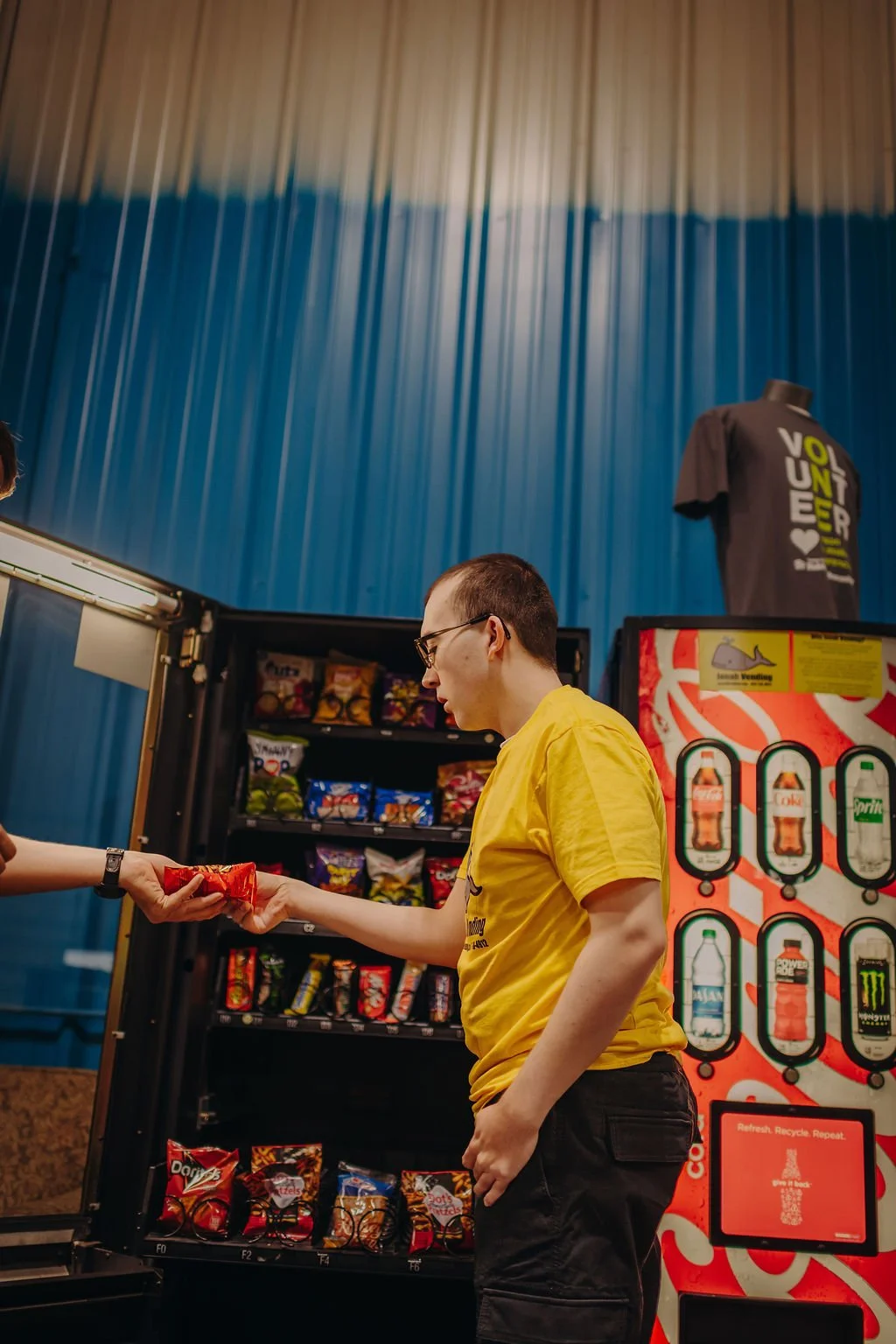


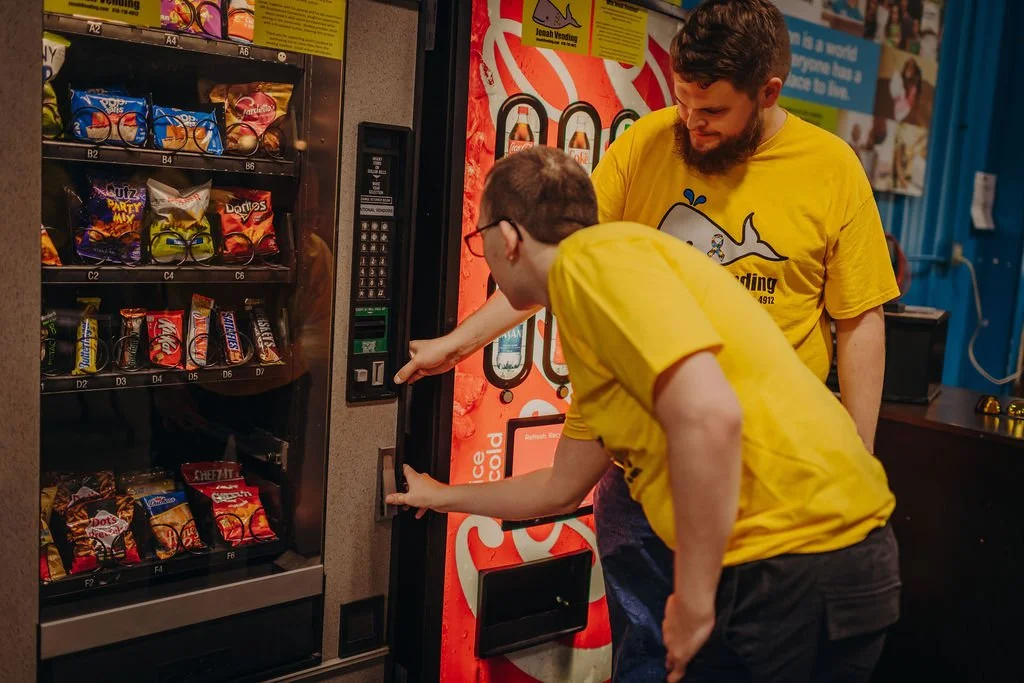
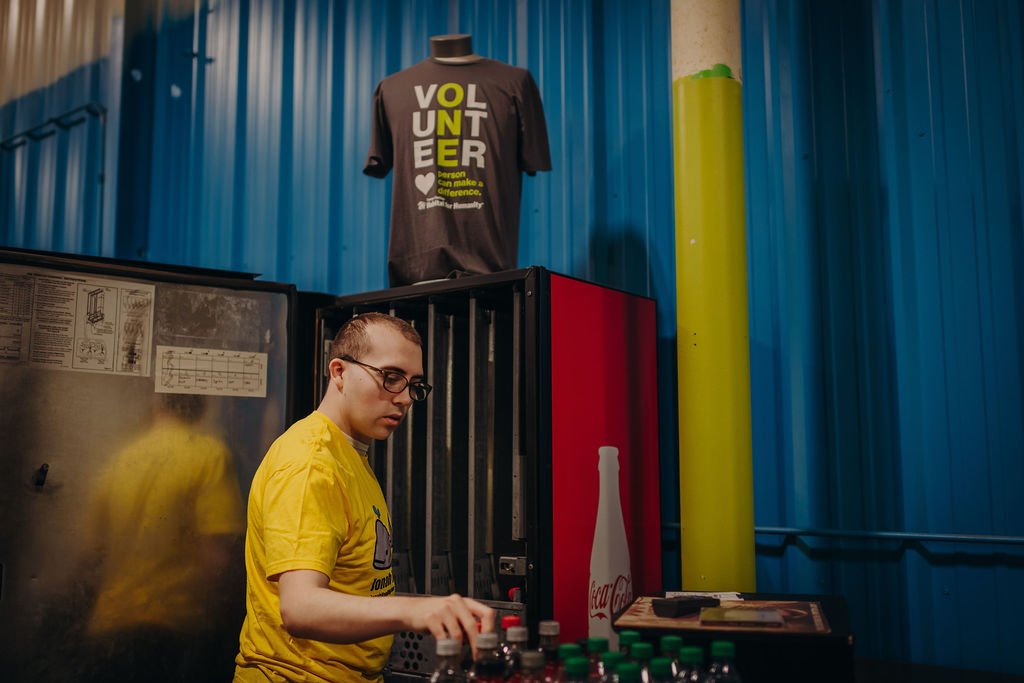
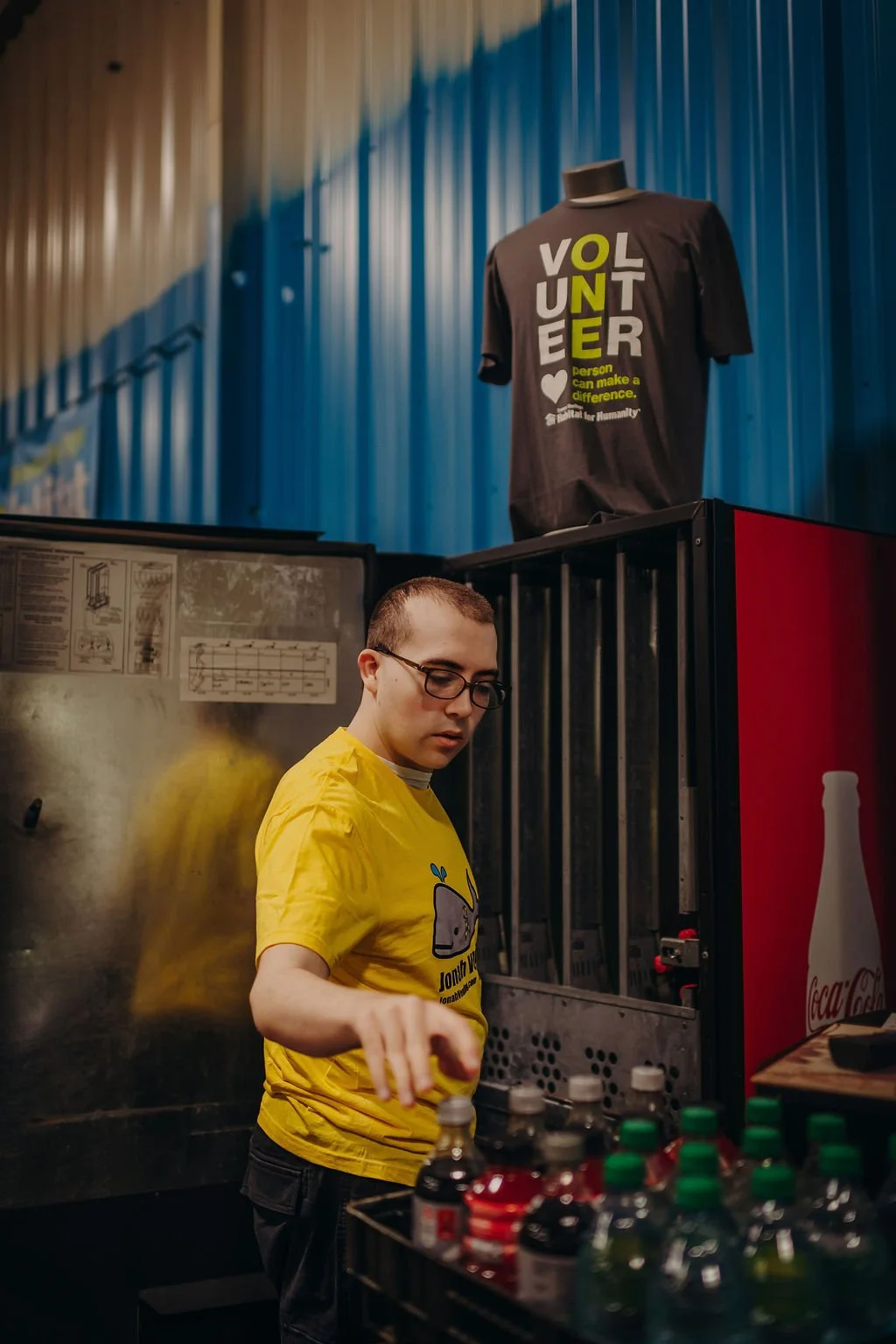

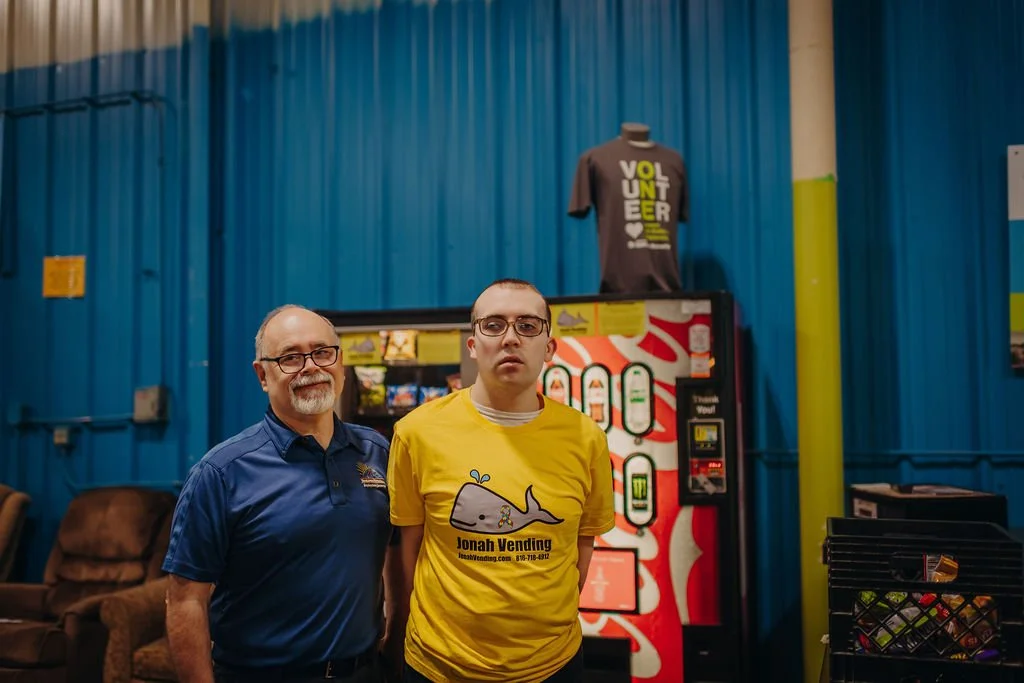
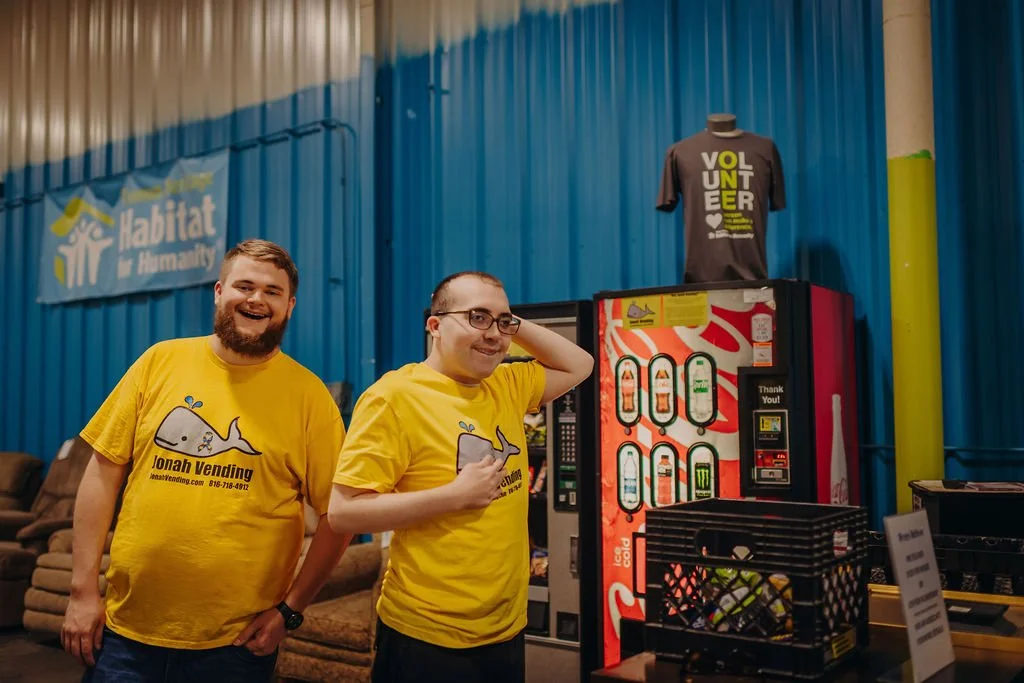
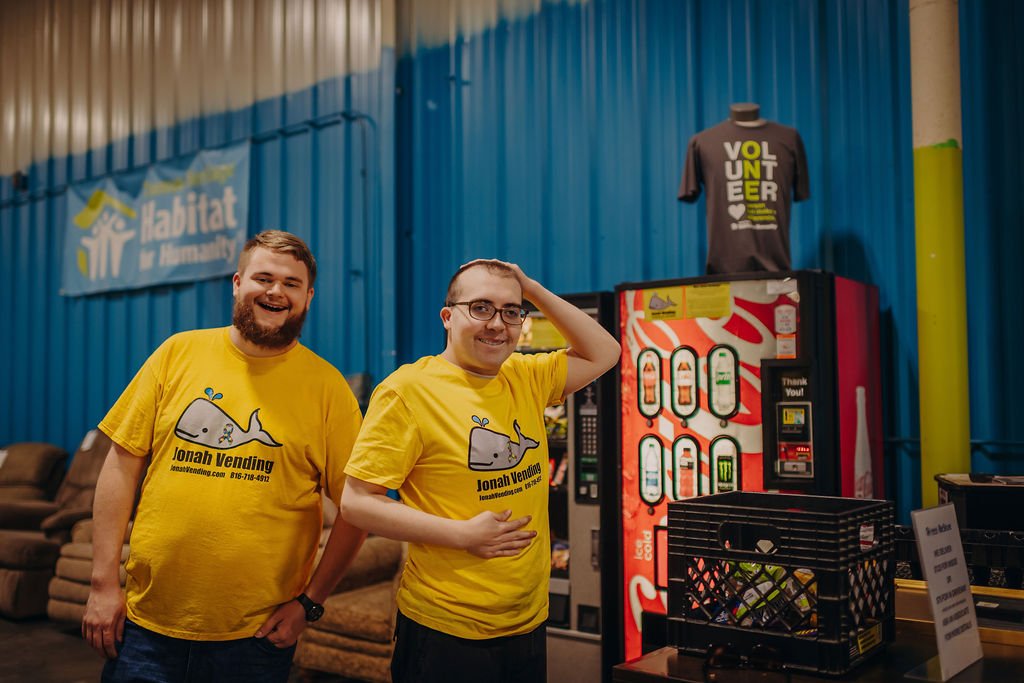
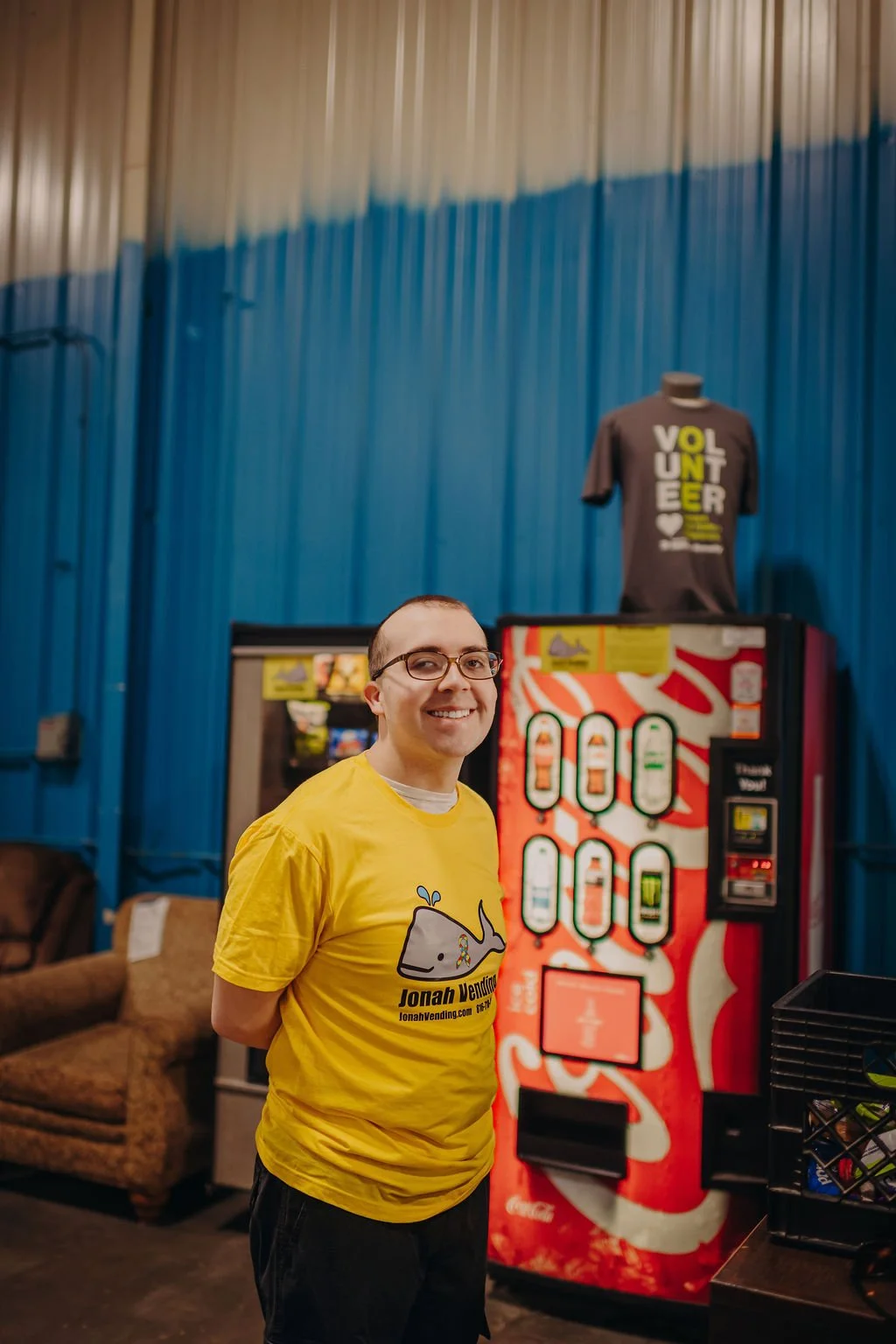
Pictured above: Jonah with Jonah Vending working to fill his machines. Contact www.jonahvending.com for more information
April is Autism Acceptance Month. It is a time to listen, to learn, and to better understand the experiences of people with autism in our communities. But for many people, acceptance is not something that happens once a year. It is part of everyday life, across every stage of life.
Sometimes, acceptance is not something you can measure or define. It shows up in small, everyday moments that shape whether someone feels comfortable, included, and able to take part.
This is one of those moments.
A young man stood just inside the doorway of a community center, watching the room. People were talking, music was playing, and groups had already formed. From the outside, it looked like a simple event. For him, it was something else entirely.
New spaces can feel overwhelming. Sounds, movement, and uncertainty can build quickly.
He paused.
Someone noticed and walked over, not to rush him, but to stand beside him. They talked for a moment. No pressure. No expectations. After a few minutes, he stepped further into the room. Later that evening, he joined a small group. By the end of the night, he was laughing.
Moments like this may seem small. They are not.
For many people with autism, everyday experiences like entering a new space, starting school, beginning a job, or building relationships can come with layers of stress that others may not see. Acceptance is not just about understanding autism in theory. It is about how we respond in those moments.
Jennifer Koehler, Autism Resource Specialist, MSW at eitas, sees this every day in her work with individuals and families.
“Autism is not one experience,” she explains. “It changes and grows with the person. What someone needs as a child may look very different as a teenager or as an adult.”
That understanding shapes how support should look, not just in one moment, but over a lifetime.
Autism Across the Lifespan
Acceptance does not look the same at every stage of life. But at every stage, it matters.
Early Childhood
For young children, acceptance can look like early support, patience, and creating environments where communication and development are encouraged in ways that work for them. Families are often learning, adjusting, and navigating systems at the same time. Having support and clear information can make a meaningful difference in those early years.
School Age
In school, acceptance can look like inclusion in classrooms, accessible learning environments, and teachers who understand that behavior is often communication. It can mean making space for different ways of learning, interacting, and participating.
Transition to Adulthood
As individuals move into adulthood, new challenges and opportunities emerge. Employment, independence, and community involvement become central. This is often where gaps can appear, but it is also where the right supports can open doors.
Adulthood
For adults with autism, acceptance is about more than access. It is about belonging. It is having the opportunity to work, build relationships, participate in the community, and make choices about daily life. It is also recognizing that support may still be needed, and that support should reflect the person’s goals and preferences.
As Jennifer shares, “Too often, services are designed around systems instead of people. Real acceptance means listening first and building support around the person, not expecting the person to fit the system.”
What Makes Acceptance Possible
Across Jackson County, support looks different for each person. Sometimes it is a quiet moment at the edge of a room. Sometimes it is a conversation about what feels comfortable. Sometimes it is having the right supports in place so a person can try something new with confidence. That is where connection matters.
Through Support Coordination, individuals and families create plans built around what matters most to them, including their goals, routines, and the life they want to live. Transportation brings those plans to life. It provides a reliable way for people to get to work, attend programs, and stay connected to their communities. Together, these services work hand in hand to turn plans into real opportunities, supporting independence, access, and full participation in everyday life.
Families Are Part of the Story
Autism does not affect just one person. It touches families, caregivers, and support systems. Support does not happen in one moment. It happens over time, through relationships, trust, and understanding what matters most to each person and their family. For many families, having someone to walk alongside them can make all the difference.
Acceptance in Everyday Moments
Autism Acceptance Month is often talked about as a time for awareness. Awareness is a starting point. Acceptance is something more.
It is creating spaces where people feel comfortable being themselves.
It is listening when someone tells you what they need.
It is making room for different ways of communicating, participating, and connecting.
It is making sure people are not just present, but truly included.
Across our community, providers, advocates, and organizations are working together to make this possible. When that happens, more people have the opportunity to live full, connected lives.
Because when people feel safe, understood, and supported, they are able to take part in the moments that matter most.
A Resource for Individuals and Families
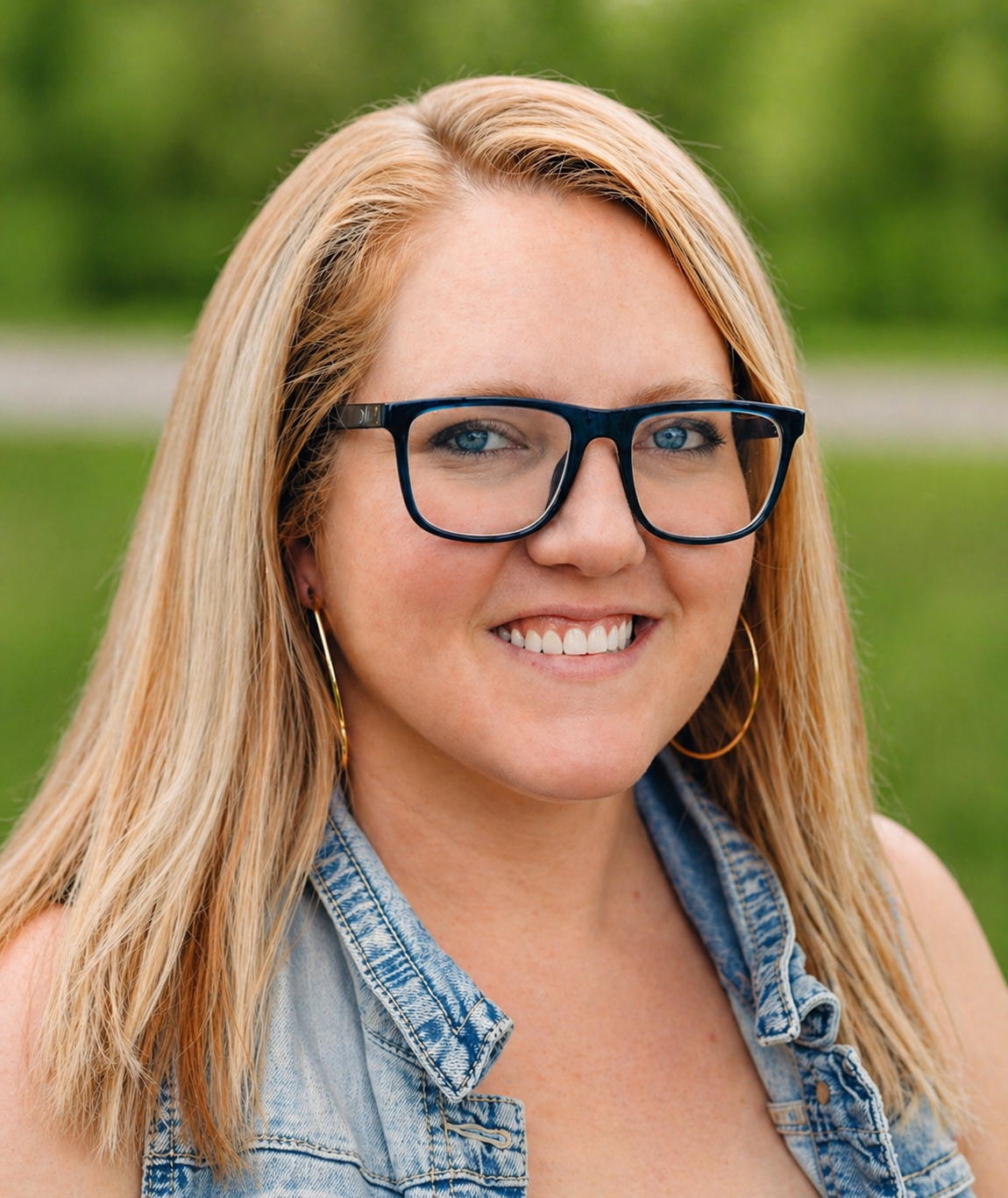
Pictured: Jennifer Koehler, Autism Resource Specialist at eitas
“Support looks different for everyone, and having the right guidance can make a meaningful difference.”
At eitas, Jennifer Koehler, Autism Resource Specialist, MSW, works alongside individuals and families to help navigate what comes next. Her role is centered on listening first, understanding each person’s experience, and helping connect them to the right supports at the right time.
Jennifer provides guidance on autism across the lifespan, offering practical strategies, education, and resources that reflect real life. While she is part of the Community Outreach team, her role is accessible not only at eitas, but across the community. Support Coordinators, families, and partner organizations can all connect with her, ensuring that knowledge, resources, and support are shared and not limited to one program or team.
Whether someone is navigating a new diagnosis, planning for a transition, or looking for ways to build connection and independence, her work helps create a clearer path forward.
Because the right support, at the right time, can change what is possible.
For more information on Community Outreach at eitas visit https://www.eitas.org/community-outreach-1