

When Behavior Is Really Stress: Understanding Trauma-Informed Care
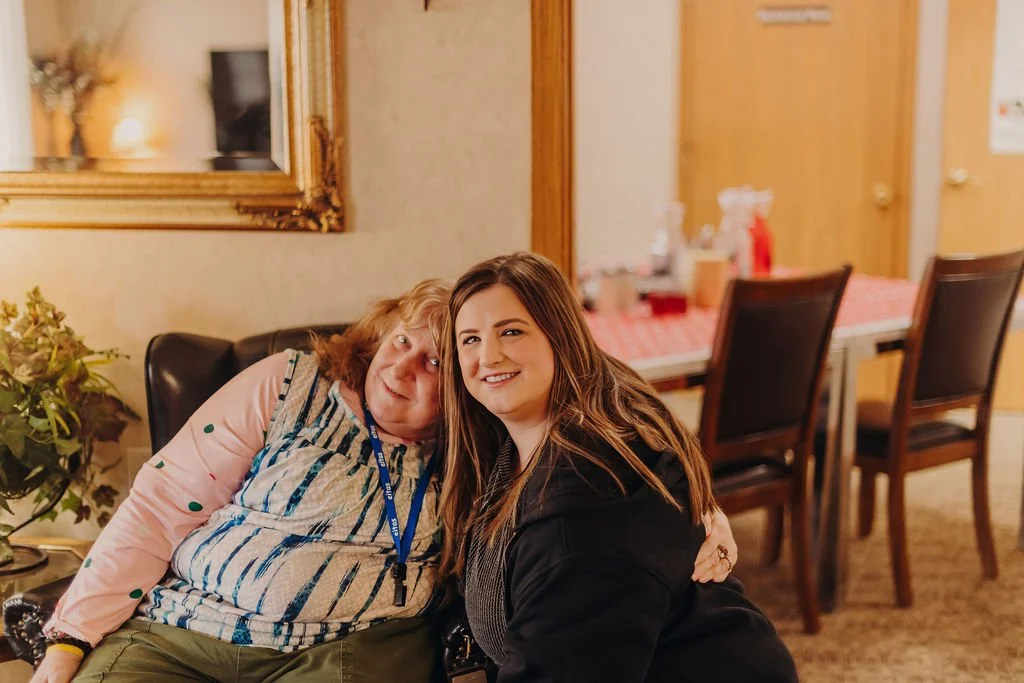
A woman with an intellectual disability and her support coordinator share a close, relaxed moment together, showing how feeling safe, seen, and supported helps build trust and meaningful connection.
Understanding Trauma-Informed Care in I/DD Services
March is Developmental Disabilities Awareness Month. It is a time to pause and listen more closely to the experiences of people with intellectual and developmental disabilities, and to think about what meaningful support truly looks like. Sometimes, that understanding begins with a moment that feels confusing at first.
An annual planning meeting had been going smoothly. For many people with intellectual and developmental disabilities, these meetings are part of their services. Each year, a person meets with their support coordinator and team to talk about goals, supports, and what they want the year ahead to look like. Most of the time, these conversations are calm and routine. But sometimes, something shifts.
A young woman we’ll call Mary sat quietly at the end of the table while the team talked through updates to her plan. She seemed okay. Then the conversation turned to employment, and within seconds, the mood in the room changed. Mary picked up the pencil in front of her and threw it across the table. She pushed her chair back and stood up. Someone asked her to calm down. Another reminded her the meeting was important. Mary sat back down and said she didn’t want to talk about this anymore. So they listened.
Years earlier, Mary had lost a job after a difficult meeting with supervisors. When the topic of employment came up, it brought that moment back. What looked like “bad behavior” in the moment was actually stress and fear. To others in the room, it was a routine conversation. For Mary, it felt like reliving something painful. Moments like this happen more often than many people realize.
Many people with intellectual and developmental disabilities have experienced trauma at different points in their lives. When those experiences are not understood, behavior can easily be misunderstood. Sometimes people are physically safe, but they do not feel safe. Trauma-informed care asks us to slow down and respond differently in those moments. Instead of asking, “What is wrong with this person?” we begin asking a different question: “What might this person have experienced?” That shift in perspective can change everything about how support is provided. Like accessibility, this approach does not only help one person it improves how we support everyone.
Dr. Karen Harvey, an expert in trauma-informed practices and a featured speaker at the upcoming Safe, Seen, Supported: Trauma-Informed Approaches in I/DD Care conference hosted by eitas, explains it this way:
“We never know what people have been through and the ways in which they are carrying those experiences. People can be triggered in ways we may not understand. In those moments, they need support, not judgment. Too often, behavior is treated as the problem, when it is actually a symptom. When in fact, it is often a response to trauma.”
Developmental Disabilities Awareness Month reminds us of something simple but important: understanding people’s experiences matters. For people with intellectual and developmental disabilities, accessibility is not only about buildings or ramps. It is also about how conversations are held, how people are spoken to, and whether they feel safe sharing their thoughts. Planning meetings should center on the person. When we approach these conversations with patience and understanding, the meeting becomes more than a requirement—it becomes a space where a person’s voice, experiences, and choices are respected.
Trauma-informed care is part of that kind of accessibility. It encourages us to look beyond behavior and understand what may be underneath it. And like all forms of accessibility, it benefits everyone.
Across Jackson County and throughout Missouri, more people are recognizing the importance of trauma-informed care in services for people with intellectual and developmental disabilities. Providers, advocates, and community leaders are learning from one another and sharing what works. That shared understanding helps create services that are safer, more respectful, and more effective.
To continue this work, eitas will host Safe, Seen, Supported: Trauma-Informed Approaches in I/DD Care on April 15, 2026, in Lee’s Summit, Missouri.
Because when people feel safe, seen, and supported, they can live full, connected lives where Nothing About Me Without Me is not just a value, but a daily reality.